
HTH (Nobia)
Case
Through my nearly 2 years at HTH (Nobia) I designed several elements to the website. My main goal was to achieve commercial KPIs as well as securing the usability – a fine line which was succeeded.
Services
- User Research
- User Flows
- Google Analytics
- ContentSquare
- Wireframes
- UX conversion design
Year
2019-2022
Background
Balancing Commercial KPIs and UX
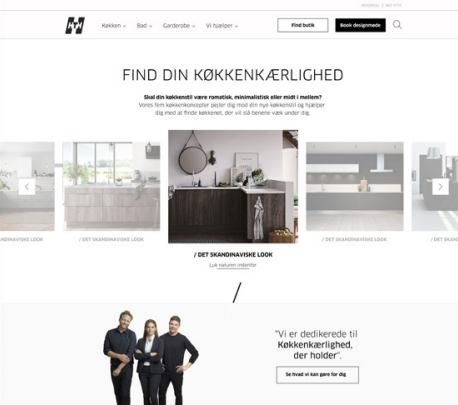
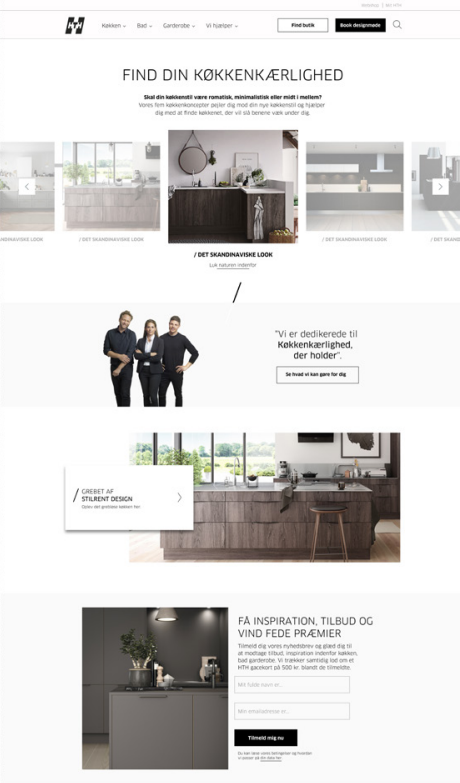
As a Digital Designer at HTH Kitchens, my primary focus was creating high-impact digital media that converted while staying true to user-centric principles. In the kitchen industry, the customer journey is often complex and high-stakes, which requires a delicate balance between driving sales and providing clear, helpful guidance.
Challenge
My work centered on meeting ambitious commercial KPIs without compromising the user experience. The goal was to optimize existing touchpoints and develop new digital elements that felt intuitive rather than intrusive.
The presented work will solely focus on the designs. The prior data collection, analysis etc. are disclosed due to confidentiality.
My Approach
I focused on integrating UX best practices into every asset I developed, from interactive web elements to digital marketing materials. Key areas of my work included:
-
Conversion Optimization
-
Redesigning key interface elements (such as price transparency tools and pop-ups) to ensure they eased the user’s decision-making process.
-
-
Visual Hierarchy
-
Ensuring that complex information, like kitchen pricing and service levels, was digestible and visually prioritized to guide the user toward a conversion.
-
-
Performance-Driven Design
-
Constantly validating that design changes maintained or improved conversion rates, ensuring that “better UX” also meant “better business.”
-
By keeping a close eye on data while advocating for the user, I helped HTH bridge the gap between commercial requirements and a seamless digital brand experience.
Design
Newsletter signup
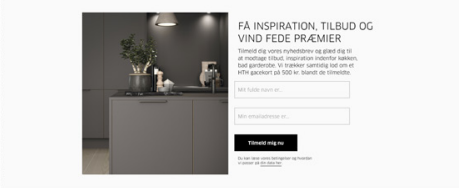
To comply with the new GDPR regulations as well as increase conversion. Two different variants were designed, one of the two is displayed on this page.
Purpose:
When it comes to content hierarchy, this version carries more ‘weight’ and focuses more on conversion. I achieved this by using the image and occupying more screen real estate compared to the other version.

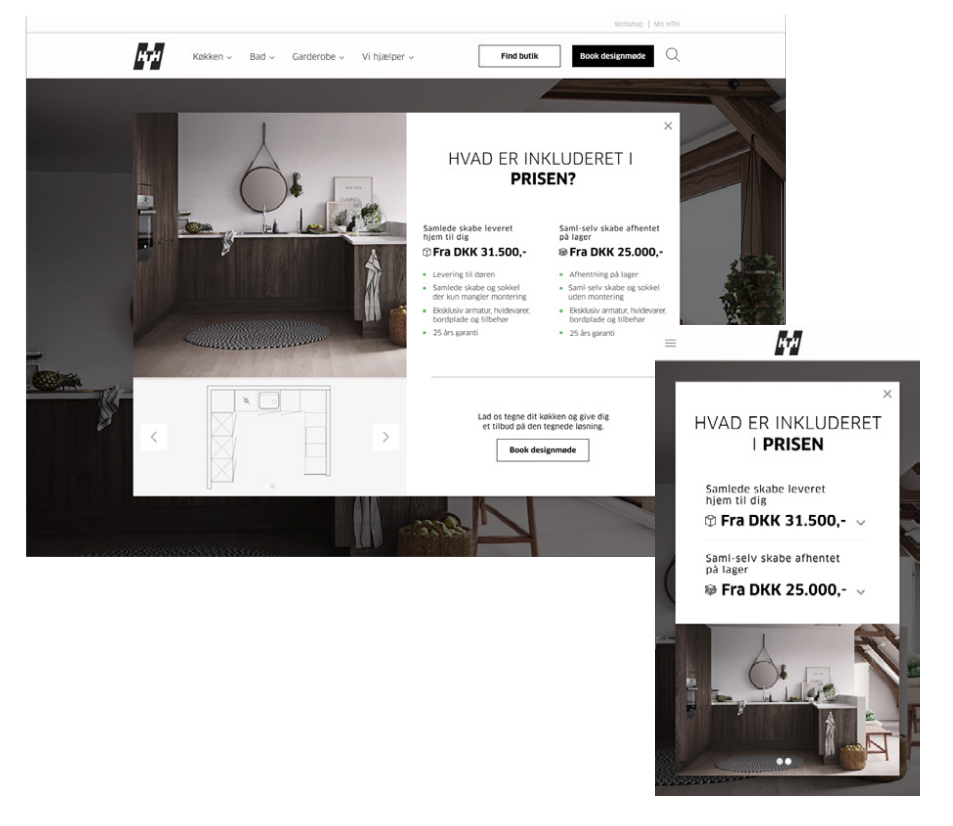
Greater price transparency
Goal: To create more transparency regarding the product selection while increasing the conversion rate.
Many factors influence the final price of a kitchen. That’s why I redesigned the existing pop-up element, to make the pricing clearer without compromising the conversion rate.
I integrated the following factors into the design to show what affects the price: Size, number of cabinets, and service level (pre-assembled or flat-pack).